Manufactured in UK
Third-party batch tested
Fast discreet shipping
24/7 dedicated support
Manufactured in UK
Third-party batch tested
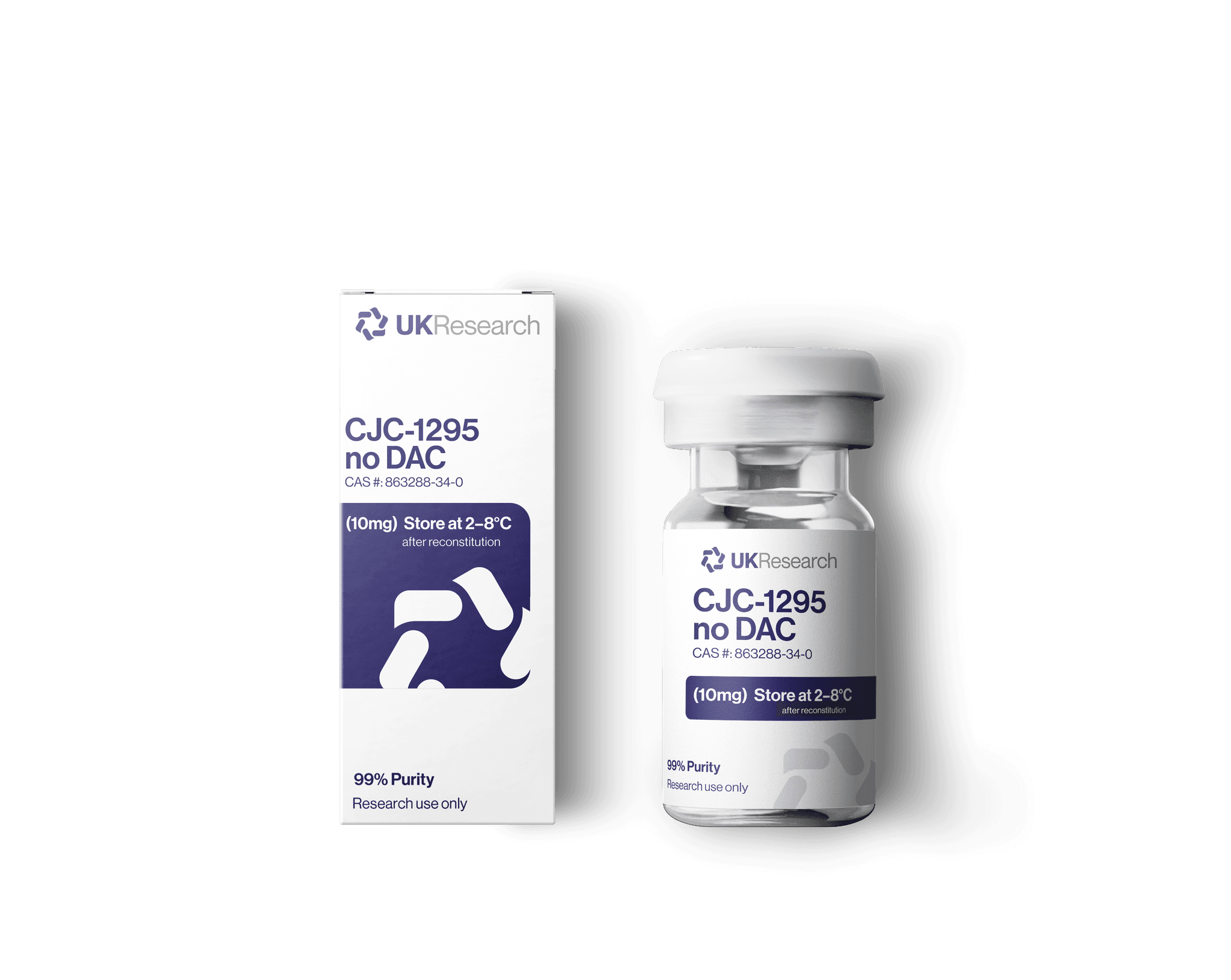
Research Use Only
These products are for laboratory research only and not intended for medical use. They are not FDA-approved to diagnose, treat, cure, or prevent any disease. By purchasing, you certify they will be used solely for research and not for human or animal consumption.
CJC-1295 No DAC is a modified GHRH(1-29) analog incorporating four amino acid substitutions at positions 2, 8, 15, and 27 designed to confer resistance to dipeptidyl peptidase-4 (DPP-4) degradation while preserving receptor binding affinity. Unlike the DAC-modified version with extended half-life, this variant maintains a shorter duration of action (approximately 30 minutes), enabling amplification of physiologic GH pulse patterns rather than sustained elevation. Research models examine its effects on pituitary GHRH receptor activation, growth hormone secretagogue activity, IGF-1 pathway stimulation, circadian GH rhythm modulation, and metabolic signaling in laboratory settings.
CJC-1295 was developed by ConjuChem Biotechnologies in the early 2000s as part of efforts to create GHRH analogs with improved pharmacokinetic properties. The original CJC-1295 with DAC (drug affinity complex) was designed for prolonged activity through albumin binding, reaching phase II experimental programs before discontinuation. The No DAC variant, retaining the core GHRH(1-29) modifications without the albumin-binding complex, emerged as a research tool for studying pulsatile signaling dynamics and has become widely utilized in somatotroph axis investigations.
Teichman et al. (2006).
CJC-1295 no DAC Structure
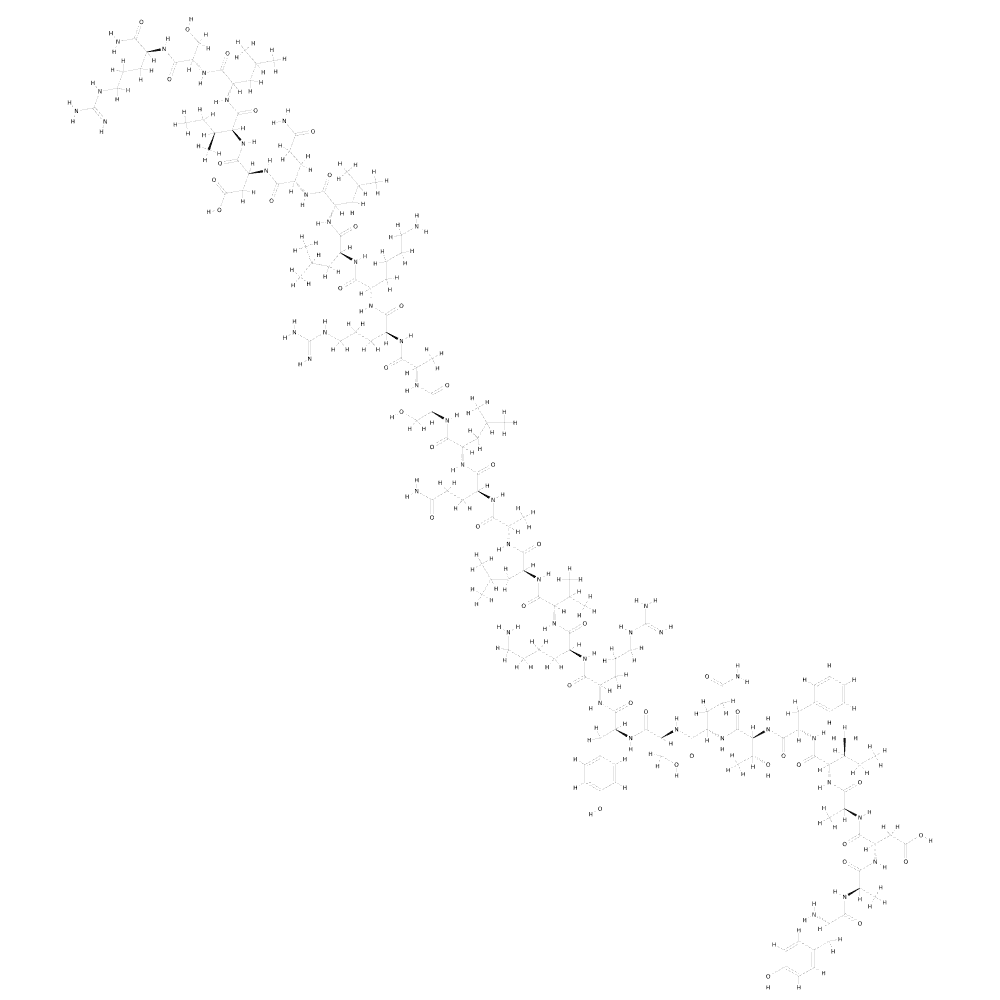
CAS #: 863288-34-0
Molecular Formula: C₁₆₅H₂₆₉N₄₇O₄₆
Molecular Weight: 3647.28 g/mol
PubChem ID: 91976529
CJC-1295 No DAC has been extensively studied in neuroendocrine research, with investigations focusing on pulsatile signaling patterns, pituitary pathway pharmacology, downstream effects, and somatotroph axis regulation in various experimental models. Studies examine its role in amplifying endogenous pulsatile signaling without disrupting native rhythms.
Key Areas of Research:
Signaling: Pulsatile, circadian, peak modulation
Pharmacology: Target binding, somatotroph, cAMP
Downstream: Hepatic signaling, cascades, activation
Endocrine: Lipolysis, nitrogen, protein synthesis
Together, these investigations demonstrate CJC-1295 No DAC's ability to modulate pulsatile endocrine signaling patterns. As a short-acting GHRH analog, it provides a research framework for examining hypothalamic-pituitary-somatotroph axis function, pulsatile dynamics, and downstream signaling in diverse experimental paradigms.
Teichman et al., Clinical Endocrinology, 2006
Alba et al., The Journal of Clinical Endocrinology & Metabolism, 2005
References
Alba M. et al. (2005). Once-daily administration of CJC-1295, a long-acting growth hormone-releasing hormone (GHRH) analog, normalizes growth in the GHRH knockout mouse. The Journal of Clinical Endocrinology & Metabolism, 90(4):2171-2180.
Ionescu M. & Frohman L.A. (2006). Pulsatile secretion of growth hormone (GH) persists during continuous stimulation by CJC-1295, a long-acting GH-releasing hormone analog. Growth Hormone & IGF Research, 16(3):201-206
Our Process


Text us, our dedicated team is here to help
Reach out and get a response within minutes.


Frequently Asked Questions
Everything you need to know about our products and processes.
What's the actual amount in each vial?
Are additional supplies needed?
How long does a vial last?
Does the product come with instructions?
What purity level is guaranteed?
